Introduction
The cryptic sequence VHSGJQM defies immediate interpretation—is it a coded message, an acronym for a clandestine project, or simply a random string that has taken on unintended significance? In an era where algorithms generate endless combinations of letters and numbers, certain patterns occasionally capture collective curiosity, sparking debates, theories, and even subcultures. This article delves into the mystery of VHSGJQM, exploring its potential origins, cultural interpretations, and the human tendency to seek meaning in the ambiguous. From linguistic analysis to speculative fiction, we will examine how this peculiar arrangement of characters has inspired fascination and what it reveals about our relationship with the unknown.
1. The Linguistic Puzzle: Breaking Down VHSGJQM
At first glance, VHSGJQM appears to be a jumble of consonants without obvious semantic value. But could it conceal a deeper structure? Computational linguists might analyze its phonetic properties, noting the absence of vowels and its resemblance to machine-generated passwords or license plate codes. Alternatively, it could be an acronym—each letter standing for a word in a technical manual, a corporate initiative, or a forgotten government program. This section dissects VHSGJQM through the lenses of cryptography, probability, and pattern recognition, asking whether it follows any known naming conventions or if its randomness is precisely what makes it compelling. By comparing it to similar enigmatic strings (like “QWERTY” or “XKCD”), we explore whether it was designed to resist interpretation or if its meaning has simply been lost to time.
2. Cultural Resonance: How VHSGJQM Became a Blank Canvas
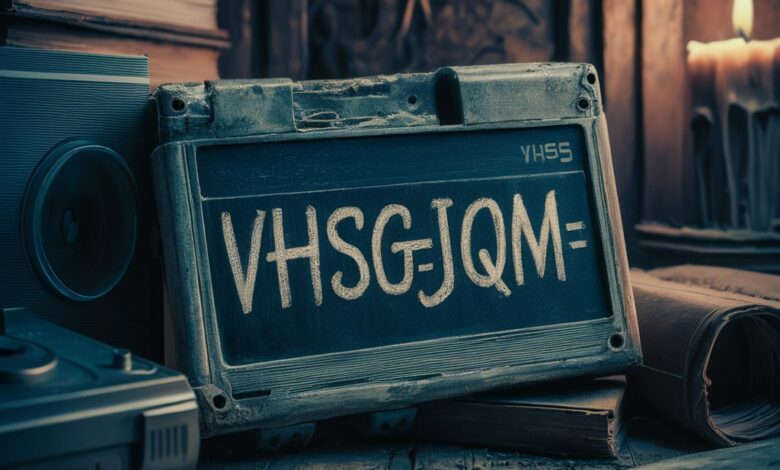
Why do certain meaningless sequences capture imaginations? Like the fictional “Tannhäuser Gate” or the viral “Birds Aren’t Real” conspiracy, VHSGJQM may have morphed into a meme or artistic motif precisely because it lacks a fixed definition. Online communities might have adopted it as an inside joke, assigning it absurd backstories—perhaps it’s the name of a lost ’80s VHS tape, a secret society’s insignia, or an AI’s first attempt at poetry. This section investigates how VHSGJQM has been repurposed in digital culture: as a band name in niche music scenes, a placeholder in coding forums, or even the title of an abstract art exhibition. Its power lies in its malleability; the less it “means,” the more it can become.
3. Psychological Fascination: The Allure of the Unsolvable
Humans are pattern-seeking creatures, and VHSGJQM taps into the same thrill as Rorschach tests or conspiracy theories. Psychologists suggest that ambiguous stimuli trigger creative cognition, prompting individuals to project their own narratives onto the void. Is VHSGJQM a test of our cognitive biases, revealing how quickly we invent explanations for the inexplicable? This section examines case studies of other “meaningless” phenomena that gained cult followings, from the Wow! signal in astronomy to the Polybius arcade game myth. Whether through pareidolia (seeing faces in clouds) or apophenia (finding connections where none exist), VHSGJQM becomes a mirror for our need to impose order on chaos.
4. Speculative Futures: Could VHSGJQM Become Something More?
What if VHSGJQM evolves beyond its current obscurity? Historically, nonsense words have gained legitimacy—think of “google” or “kodak”—through repetition and institutional adoption. Could a filmmaker adopt it as a title for a surrealist short, or might a tech company trademark it for a quantum computing project? This section imagines scenarios where VHSGJQM transitions from randomness to cultural shorthand, perhaps as a metaphor for information overload or a rallying cry for absurdist movements. Alternatively, it may remain a fleeting curiosity, its brief fame preserved in niche internet archives. The tension between its potential and its probable fate raises a meta-question: Do meaningless phrases only gain meaning through our collective attention?
Conclusion: The Paradox of VHSGJQM
VHSGJQM, in its deliberate obscurity, embodies a paradox: the more we try to define it, the more it eludes capture. It serves as a reminder that not everything requires explanation—that mystery, in itself, can be a source of creativity and connection. Whether it fades into oblivion or resurfaces in unexpected ways, its legacy lies in the conversations it sparked and the minds it intrigued. In the end, VHSGJQM is not a puzzle to solve, but a testament to the beauty of the unanswered.